Pages

Saturday, December 31, 2016

Toward a Popular Vote

The "Hamilton Electors" and Electoral College protestors didn't succeed on Dec. 19. [AP Photo/Elaine Thompson]
“She has made history. In a nation that is good at so many things but that has made it uniquely difficult for a woman to be elected to federal office. She became the first major party nominee as a woman to be president and last night won the popular vote of Americans. That is an amazing accomplishment.”  -- Tim Kaine, Nov. 9

Almost three million more Americans voted for Hillary Clinton than for Donald Trump last month. This is both true and yet practically meaningless given the Electoral College. 

There are more dimensions to the 2016 presidential election outcome than one can wrap their mind around. The Democratic Party’s reckoning alone will likely last years. 

But the sharp popular vote / Electoral College divergence this year is a big part of what happened. It was decisive. How do we respond to the second split in five elections?

Sunday, November 13, 2016

Processing the Unthinkable

It's real.
Like basically everyone else, I’m trying to process the unexpected and devastating election result. My thoughts are a bit of a jumbled mess, but I need to get them out of my own head for self-preservation purposes if nothing else. 

Monday, August 29, 2016

What's Next for the Trans-Pacific Partnership?

The leaders of the prospective TPP member countries in 2010.
The presidential campaign is the focus of the American political universe right now. That focus will only intensify over the next two and a half months as November 8 draws closer.

But despite that hyper-focus, there is actual governing to do after the campaign ends. Five key issues that will shape the post-election political agenda aren’t getting enough attention right now, in my estimation. 

Over the next two weeks I’ll discuss each of them. Today I wrote about the future of the Trans-Pacific Partnership.

Tuesday, August 09, 2016

Two-Party Problem

Green Party presidential candidate Jill Stein (Getty Images)
There are few things more tiresome than the quadrennial exercise of arguing about whether to vote for the lesser of two evils in American presidential elections. The combination of Bernie Sanders’ primary campaign, antipathy towards Hillary Clinton, and the specter of Donald Trump has made this year’s cycle particularly intense.

Saturday, January 02, 2016

9 Predictions for 2016


Matt Yglesias of Vox wrote a piece titled “11 bold predictions for 2015” at the end of 2014, and though it’s already January 2, I thought it would be a fun idea to try myself this year. So here are a few (admittedly not especially bold) guesses at what will happen in 2016.

Sunday, October 18, 2015

On Coming Up Short, Again

(Photo by Jim McIsaac/Getty Images)
This was not the Dodgers year, rationally speaking.

They lost 40% of the planned starting rotation for the season in April because of injuries to Hyun-Jin Ryu and Brandon McCarthy. Jimmy Rollins underperformed. Joc Pederson fell off a cliff offensively after a great first half. Yasiel Puig was in and out of the lineup with various injuries and looked like a shell of the star we’d seen the previous two years.

Yasmani Grandal, the prized return in the Matt Kemp trade and one of the best-hitting catchers in the league to start the year, was 6-for-94 (!) to finish the season because of a left shoulder injury he played through. The bullpen was better than last year but never inspired a huge amount of confidence.

Monday, August 03, 2015

Change the Rules: Presidential Nominations

Jeb Bush speaks before the Iowa Agriculture Summit in March (Jim Young/Reuters).
What is it about Iowa and New Hampshire? What is so special about those two states that warrants them going first during every single presidential cycle?

Neither state is that particularly heavily populated. Iowa ranks 31st among states, New Hampshire 42nd, according to 2014 Census estimates. No city in either state has more than 220,000 people.

It’s not diversity either. Both states are considerably notably whiter than the rest of the nation. Iowa is 92.5% white and New Hampshire is 94.2%, compared to 77.7% for the country as a whole (*).

The actual reasons these two states get to go first is tradition and inertia. In Iowa’s case, a major factor was the availability of hotel reservations in Des Moines in 1972. New Hampshire has passed laws entrenching it as the first primary, and the national parties have never bothered to overrule them.

“That’s the way we’ve always done it” is not a good reason, and it’s not without consequence. Both states winnow the field considerably, typically eliminating all but three or four candidates before the vast majority of the other states get to weigh in. Not to mention a quadrennial boost in tourism, which has benefits that should be more evenly distributed among all states.

But Iowa and New Hampshire’s outsized influence is just one problem with our nomination process. As the presidential campaign gets underway, it’s worth reviewing the rules by which our next nominees will actually be picked. It is, like so many things in the American political system, a bizarre convoluted process. We can and should do much better.

Monday, May 11, 2015

Tweetstorm: Proportional Representation and the UK Election

I became mildly obsessed with United Kingdom general election during the last few weeks of the campaign. Unfortunately, the centre-right Conservative Party won a majority of seats in the House of Commons. I tweeted some things today about proportional representation and what the implications of implementing it in the UK would be:

Sunday, April 12, 2015

Can Hillary Turn the Tide?


Hillary Clinton made clear what most have known for some time on Sunday: she will seek the presidency again in 2016.

Regardless of my own feelings on Clinton, she is the overwhelming favorite to win the Democratic nomination. A lot can happen in 18 months, but in my eyes, she is also a slight favorite in the general election against whoever wins the Republican nomination.

But if Clinton wins, she confronts a political landscape structurally hostile to the Democratic Party and progressive change. This dynamic must change is she wants to achieve anything beyond the incremental and infrequent victories that Barack Obama has been limited to since the 2010 elections.

Monday, March 09, 2015

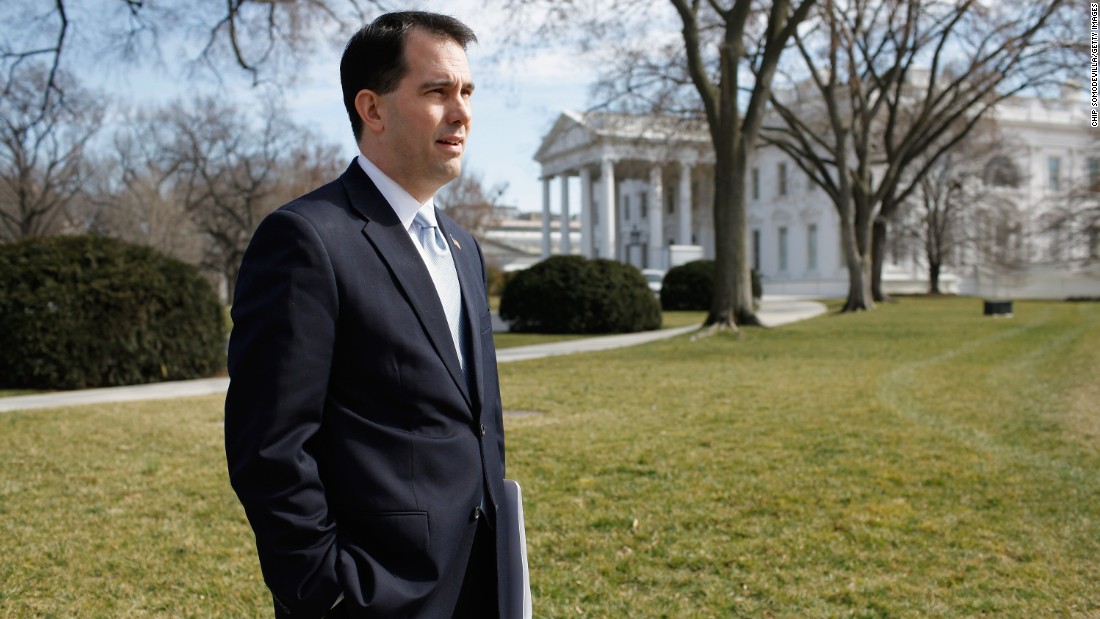
Scott Walker, Donors, and Foreign Policy


Scott Walker hasn’t even formally announced he is running yet, but he is already a formidable presidential candidate. It’s early, but he has eclipsed Jeb Bush in the polls as the Republican frontrunner.

It hasn’t been entirely smooth sailing though. Walker has made several eyebrow-raising remarks, seeming to compare ISIS terrorists with union activists and calling Ronald Reagan’s 1981 decision to fire the air traffic controllers “the most significant foreign policy decision of my lifetime.”

Saturday, February 28, 2015

Running Commentary: House of Cards, season 3


Netflix released the third season of House of Cards yesterday. Just for fun, I thought I'd do a running commentary of my reactions to each episode along of the lines of what my friend Mark did for the most recent season of Orange is the New Black. It might a couple weeks to get through all 13 episodes (1-4 so far), but I'll get there. Don't read if you want to stay un-spoiled. 

I talked about the second season of the show on an episode of The M&M Report last year.

Sunday, December 28, 2014

Kill the Filibuster or Block Everything


The silent filibuster was the bane of the liberal existence during the first two years of the Obama administration. 

Many expected that a Democratic landslide in 2008 would lead to federal action on a whole host of progressive priorities. While those two years did see an economic stimulus, health care reform, and financial regulation, all three required contentious partisan fights and huge expenditures of political capital. Legislation to address climate change, empower unions, and reform the immigration system was blocked altogether.

Friday, November 07, 2014

Reflections on the Bloodbath


The left is disturbingly familiar with failure. As the returns began to come in on Tuesday night and it became clear that Democrats would lose almost every major contested race, I knew immediately it would be one of those elections. The next month would be spent talking about why we lost, why we failed.

And there is no need to sugarcoat. It was a disaster. Democrats lost control of the Senate, lost more than a dozen House seats (at least), and lost every high-profile gubernatorial race and more. Come January, Republicans will govern Maryland, Massachusetts, and Illinois, which are traditionally among the bluest states in the country.

Tuesday, November 04, 2014

Midterms Stuff


I wrote something for the AU College Democrats blog about the midterm elections. With Democrats looking likely to have a tough night, I pointed out that it's worth focusing on the impact those elected tonight will have not just in the next Congress, but during the next presidential term, when policy change is more likely. For that reason, I think the elections in Colorado and Iowa are especially important.

As far as predictions, machines much smarter than me have you covered, but here are the fruits of playing out around with interactive tools for 20 minutes.

Tuesday, September 23, 2014

The Good Wife


I wrote about the Season 6 premiere of The Good Wife, a show I quite like, for the pop culture/entertainment blog of The Eagle. You can read it here.

Wednesday, September 10, 2014

Electoral Reform and a Democratic House


Nate Cohn detailed on Sunday the structural disadvantages Democrats face in winning back the House of Representatives in November. Republicans are all but certain not just to retain the House but expand their majority in contrast to the competitive Senate.

That Democrats will likely struggle in 2014 is not atypical. Historically the president’s party struggles in midterm elections. But the current composition of the Democratic coalition is such that it is uniquely unsuited to success in the House. Cohn explains:

Sunday, August 03, 2014

On Impeachment


Why is everyone suddenly talking about impeachment?

The idea of impeaching President Obama is deeply unpopular with the American people. Republican Speaker of the House John Boehner has dismissed the possibility, calling it “a scam started by Democrats at the White House.”

Indeed Democrats have been mentioning impeachment quite a bit themselves. The Democratic Congressional Campaign Committee has gone into into overdrive with fundraising e-mails raising the specter of impeachment. It is transparently using fear to motivate the party’s base to contribute (*).

Monday, July 14, 2014

The Underrated Piper Chapman


Jenji Kohan, the creator of Netflix’s Orange is the New Black, has spoken in interviews about how main character Piper Chapman is in some senses a “Trojan horse.”

“You're not going to go into a network and sell a show on really fascinating tales of black women, and Latina women, and old women and criminals,” Kohan told Terry Gross on Fresh Air. “But if you take this white girl, this sort of fish out of water, and you follow her in, you can then expand your world and tell all of those other stories.”

(minor spoilers below)

Wednesday, June 11, 2014

The Premature Victory Brigade


Like most political observers, I was shocked by the news last night that Majority Leader Eric Cantor had lost the Republican primary for his Virginia 7th district house seat to David Brat, a complete unkown. It was an extremely unexpected result and immediately resulted in jockeying on Capitol Hill to replace Cantor in the Republican leadership.

There are many others far more well versed in conservative circles and right-wing politics who can explain the dynamics that led to his defeat and what the fallout will be.

What I do want to talk about is the strange way that Democrats are interpreting and overreacting to this, as they typically do to instances of Republican infighting.

Tuesday, May 27, 2014

Not Ready for Hillary


More than eighteen months before the Iowa caucuses, the 2016 Democratic presidential nomination seems to be all but a foregone conclusion. 

Hillary Clinton is widely considered to be the de facto nominee, though she has not yet said she will run. Almost all of the early polls show her ahead by staggering margins and key figures within the Democratic Party are already publicly supporting her. While this is purely anecdotal, “Ready for Hillary” bumper stickers (advertising the Super PAC preemptively launched to support her candidacy) seem increasingly ubiquitous.